July 13, 2026
How We Hit 20M+ Views With Motion's UGC Program
Adish Jain
7 minutes read
The Distribution Problem
At the start of April 2026, we were facing a problem with distribution.
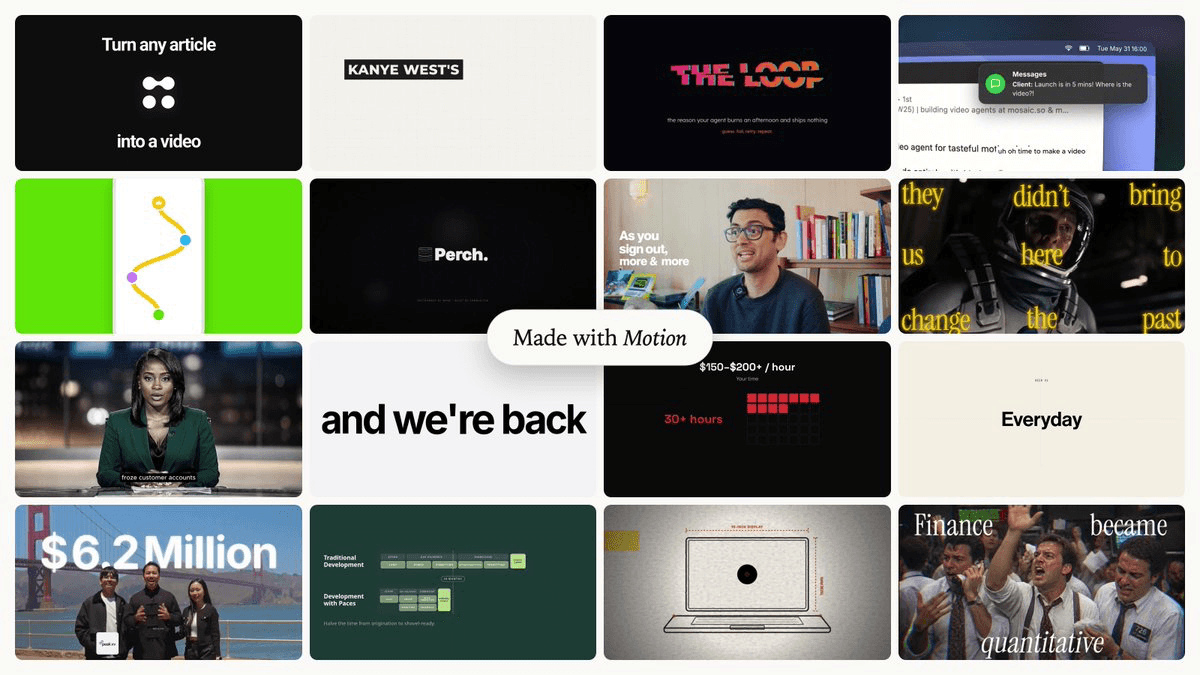
We had just launched Motion, but the market did not know what it was. We had a product that could one shot launch videos, product demos, explainers, article to video content, and any motion graphic from a prompt. Yet none of this mattered if nobody saw it, understood it, and remembered what it was.
Agency vs. In-House
We had already done a month-long pilot with an UGC agency for a flat monthly rate.
So, we had a decision to make. Do we keep paying an agency a flat monthly rate for UGC, hoping that volume picks up? Do we try to renegotiate this relationship? Or should we bring our growth in house and make a system from scratch?
At the time, our UGC program was nowhere near a growth machine. We had some content, but not enough volume nor learning. The agency approach was limited in creators, costly in its results, and most importantly, it did not feel like a system we could manipulate.
We decided to bring it in house.
We hired a GTM intern and gave him one job: turn UGC into a real growth channel.
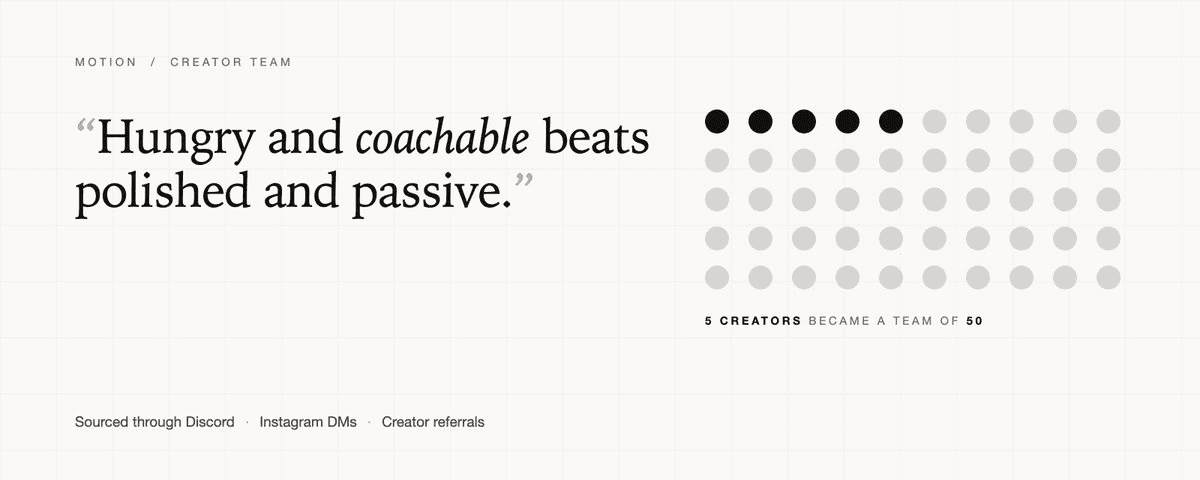
April was a slow start. We had around five creators, and some were even leaving. We were not growing immediately, the whole thing felt very far away from 20M views.
Every growth channel seems broken before it becomes a system.
The first thing that we needed to create was a system that worked for both creators and the company. It has to be sustainable for us, but genuinely rewarding for our creators. If our UGC creators were going to help grow Motion, they should participate in the upside.
We looked at data from previous creator programs. What had failed? What incentives worked? We looked not into just views, but creator quality, format testing, and management. Eventually we had reached a structure that made sense.
Treat Creators Like Coworkers
This part matters much more than people believe.
UGC is not just "hire creators and post." The incentive model of course shapes the program, but if creators feel like replaceable contractors, they will act like replaceable contractors. If our creators feel like teammates, the work gets better.
So this became our core rule going into both hiring and management:
Treat creators like coworkers.
If a creator had a problem, they reach out to someone at Mosaic. If they had a question, we'd always answer it. If they had a friend who wanted to create content, we took it seriously and reviewed their application. If they had feedback on what was working, we listened.
We do a monthly meeting where all creators get to introduce themselves, talk about what they liked and did not like about Motion to the engineers, review wins and losses about the program, and go over anything a creator needs to say.
The goal was not to build a spreadsheet of contractors, the goal was to build a creator team that wants Motion to win.
We sourced through Discord. We'd DM creators on Instagram (both experienced and completely new). We'd ask current creators for referrals. We cared about energy, taste, and speed. They did not need to have already gone viral, and in some cases it was better if they had not.
Hungry and coachable beats polished and passive.
This was when the program began to provide signs of life. Views began to grow and some videos were converting. Yet, we know we still had not found the real formula.
What Should Creators Actually Make?
Motion is a weird product to market because it holds infinite possibilities.
You can make a launch video. You can make a date invitation. You can make a product demo. You can animate your meals for the day. You can make motion graphics for a startup, a class, a meme, or some random idea at 1am.
The flexibility within motion is powerful, but also creates a content problem.
If our problem is range, what should our creators make?
We truly believe in creative freedom, UGC dies when it feels like a brand over directs it. But, creative freedom does not mean randomness.
We began looking into the statistics behind what users were using Motion for. What kinds of videos were people making? What use cases were sticky? What would make a viewer watch a UGC video and go "WOW, I need this"?
Then we built scripts around what we had found. If customers were making launch videos, we'd make a launch video UGC. If customers wanted meme animations, we'd make a UGC around that. We follow where the customers of Motion go.
The program became more scientific.
Views mattered, but they were not the entire game. We tracked formats, conversions, and asked the question "what brought in real users"? We watched what drove MCP usage. We correlated formats to revenue.
The goal was not to just go viral. The goal was to find repeatable formats that brought the right people to Motion.
The MCP x Motion Unlock
One of our biggest unlocks was MCP x Motion. Motion has an MCP, which means you can use Motion through ChatGPT (as seen in the video above), Claude, and any agent. People loved seeing this because it made video creation feel instant. You were not using a complicated editing tool. You simply asked Claude to make something, and Motion did all the video work.
That format worked because it was not just views, but conversion. We saw a spike in MCP usage, which told us the content did not just entertain, but that it changed behavior.
We doubled down on this.
Scaling to 50 Creators
We kept hiring creators, pushing for as much output as possible. We tested more angles. We watched and correlated the numbers daily. Each format was like a hypothesis.
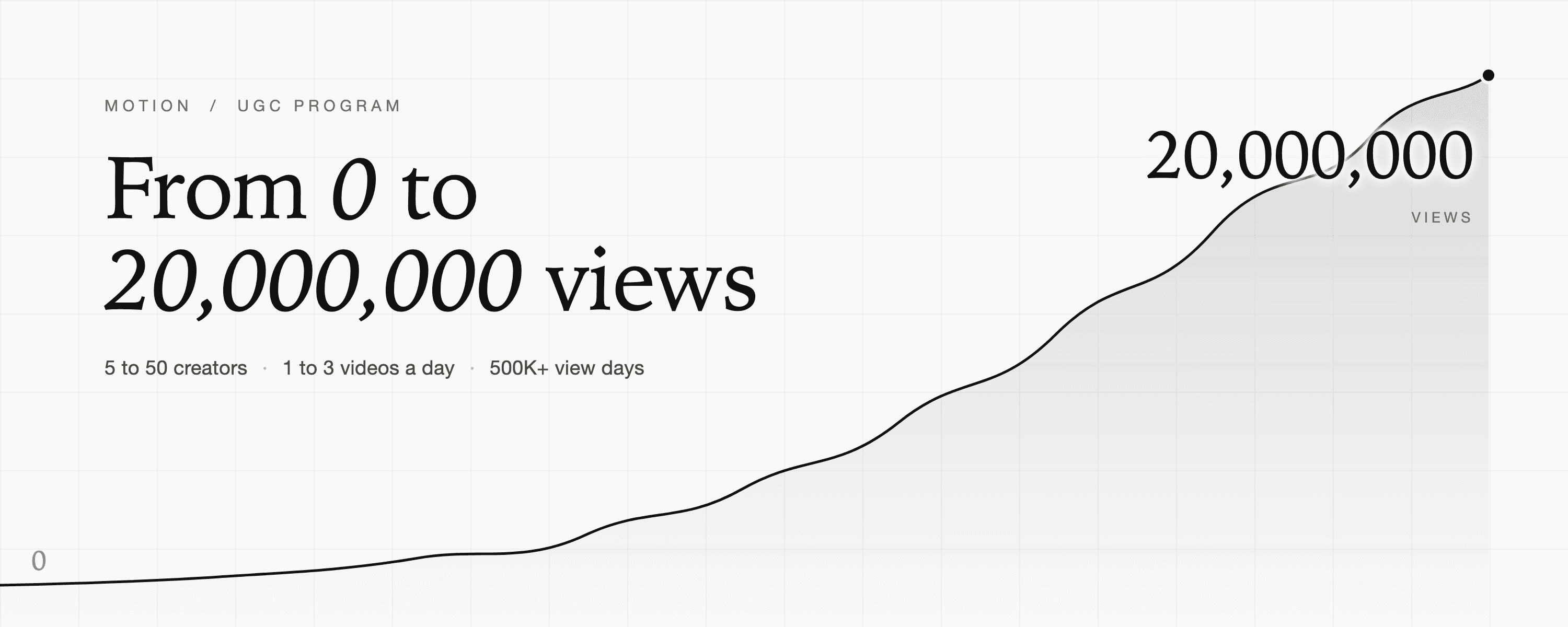
By June, we had close to 50 creators and were near 7.5M views.
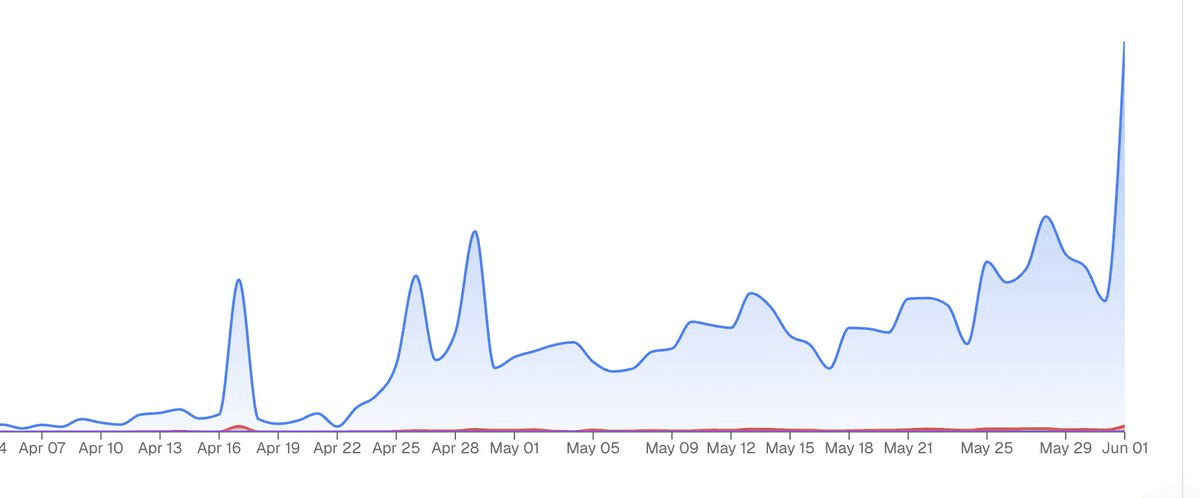
A big shoutout to the SideShift team here. Their platform helped with sourcing and management as our program scaled. Once you have dozens of creators posting constantly, ops is a huge part of growth. You need to understand who is posting, what is working, what is pending, and where the next batch of content is coming from.
Testing Everything
Then, the formats started getting more interesting. We tested "Claude x Motion." We tested "can you believe Motion made this?". We tested World Cup motion graphics. We tested out multiple languages in scripts. We tested asking out your crush with a Motion video. We tested scripts that felt funny, useful, and just weird enough to stop the scroll.
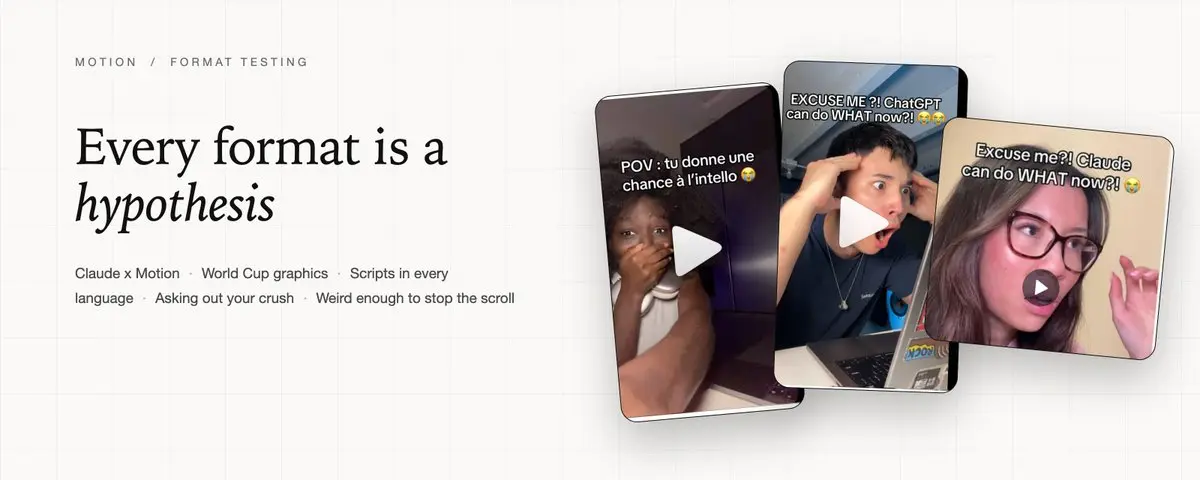
Some worked and some did not. The important part was the system kept learning.
Eventually, we began to see 500k+ view days.
We even started seeing our competitors copy our scripts and try to source our creators. Annoyingly, obviously. But also a signal that we had found something.
The Real Unlock: Repeatable Formats
The biggest unlock is realizing the top scripts are not one off demos. They were repeatable formats.
A launch video is useful, but not everyone launches a company everyday. Formats that show why someone would use Motion continuously. Daily content. Daily ideas. A content engine.
The more we focused on repeated use cases, the stronger the program got.
Crossing 20M Views
We've now crossed 20M+ views!
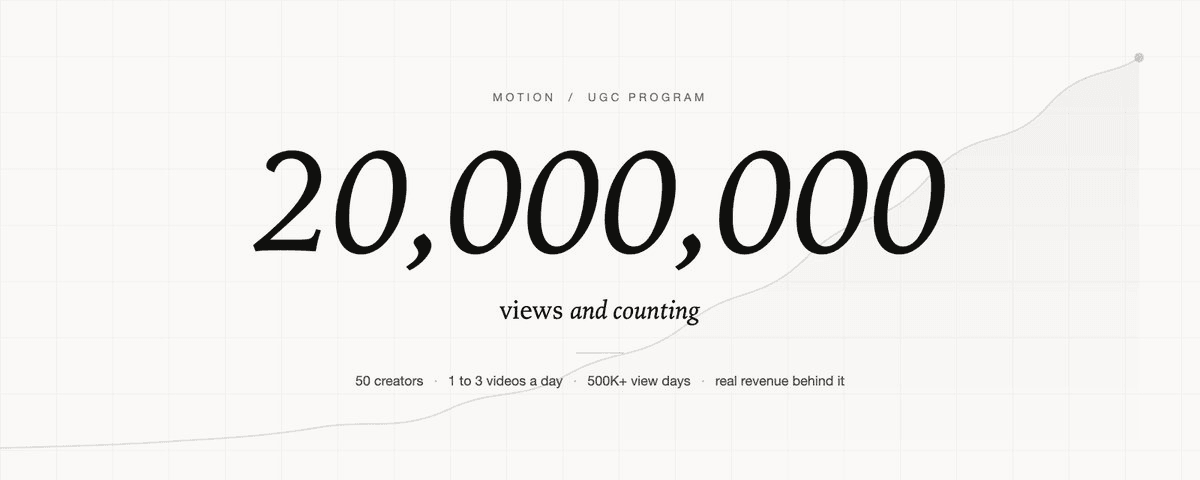
More importantly, we've seen impact in the business. We saw it in tracking. We saw it in product usage. We saw it in revenue. This is what made the milestone real.
The Lesson
The lesson is not "hire 50 creators and post a bunch." You'll spend pointless money. The lesson is that UGC works when it becomes a system.
Pick one product to push. Build a model that creators actually like. Treat these creators like teammates. Give them creative freedom, but back up these decisions with data. Study what your users actually do, and then turn these use cases into scripts. Track conversion and not just views. Then double down when something works.
Motion can be used to launch a company, explain calculus, turn an article into a video, ask your crush out, and create something nobody has even thought of.
That's what makes the content engine so fun. Every new use becomes a script. Every new script becomes a growth channel. You can even use Motion to advertise your own product and create a UGC program yourself.
What's Next
We're still hiring new creators, if you make UGC and want to work with us, reach out.
The program is still growing, the formats are still changing, and we feel as if we're just getting started.