July 20, 2026
How to Start a UGC Program

John Sellers
7 minutes read
Hello! You're reading this because you're interested in running a UGC program.
For context, I've run UGC programs since November 2025 and have achieved nearly 60M views on programs I've run by myself. Here is some of the best advice I can give when creating your own program.
And if you came for the story of how the program went from 5 creators to 50 and past 20M views, Adish already wrote it. This post is just the instructions.
Know What You're Marketing
This is one of the most important things to know before marketing any product, for that matter. If you don't know what a tool does, how will you show other people how to use it, and especially why to buy it?
I've seen this go wrong more times than I can count. The person writing the scripts never actually used the product. Ever. And you can tell, the scripts read like a landing page, the creator films it like a chore, the comments all say "ad."
Before you hire anyone, use the product for a week like a real customer would. At some point you'll go "wait, that's actually sick." Whatever made you say that is your first script.
This is why I love working for Motion. It's a carte blanche tool which I can market in any direction I want. But with that in mind, open creativity can still be wasted.
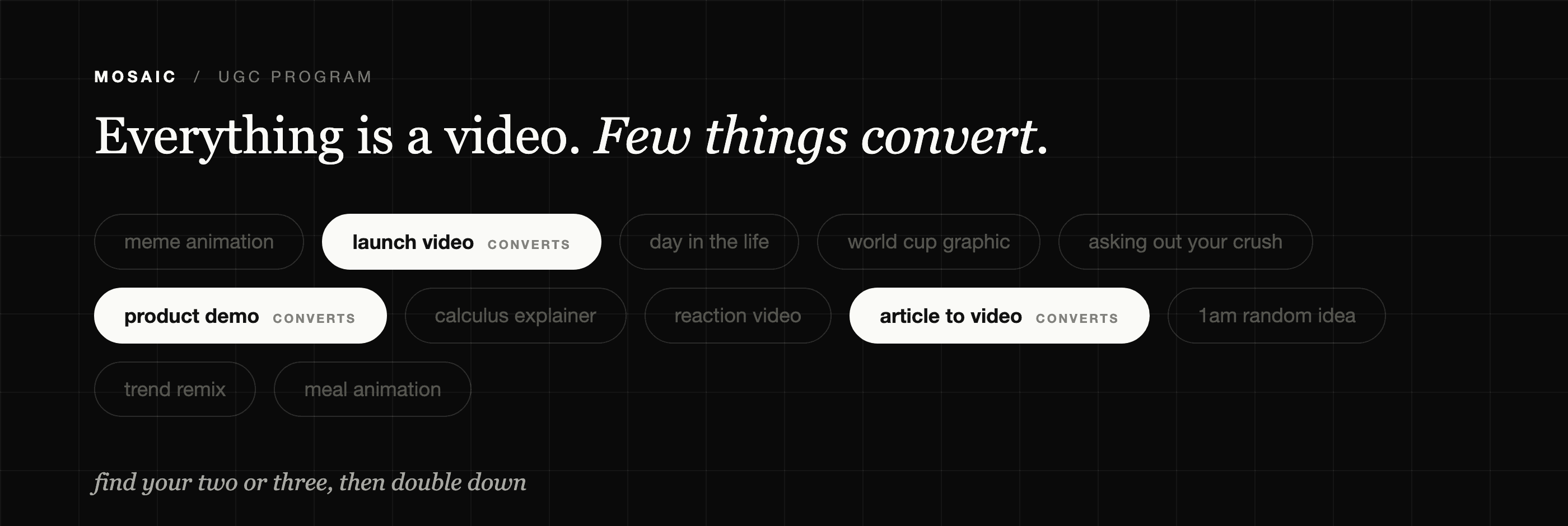
A tool that does everything is fun to market. It is also a trap. Creators will make videos about everything, and most of everything converts nobody. You need the two or three use cases that bring in actual customers. The attribution section below is how you find them.
Structure
Every program I've run needed the same five pieces.
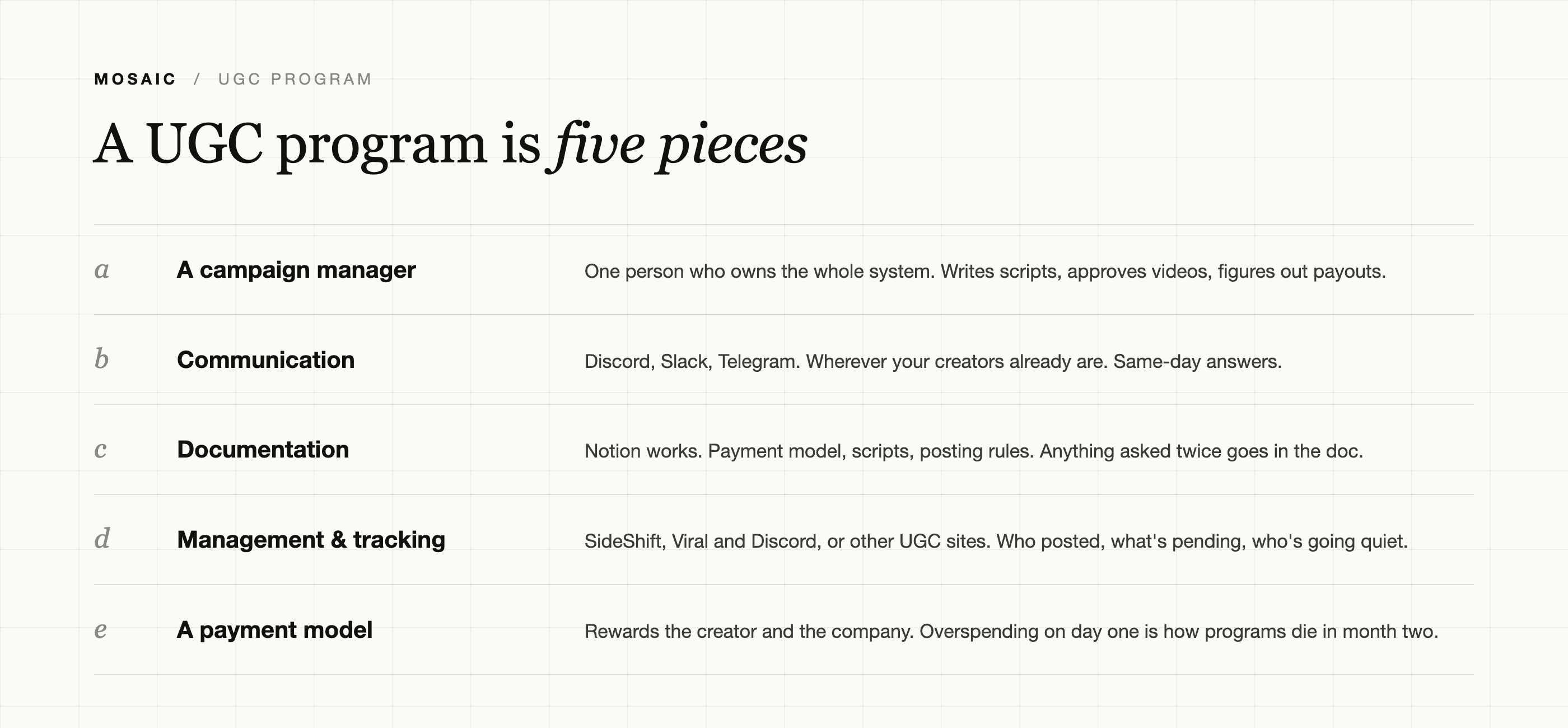
a. A UGC campaign manager. A person who owns the system end-to-end who will write scripts, approve videos, and figure out payouts. These vary by cost and performance. The part that matters is that it's ONE person's job. I've watched programs where marketing owned the scripts and "whoever was free" owned approvals, and the work just sat between people.
b. Communication. Discord, Slack, Telegram, etc. We use Discord. The bar is honestly low here, just answer creators the same day. Good creators always have other programs they could be posting for, and they go where they're treated like people.
c. Documentation. I recommend Notion. Payment model, scripts, posting rules, examples of winners. If a creator asks something twice, it goes in the doc.
d. Management and tracking. SideShift, Viral and Discord, or other UGC sites. Past ten creators you can't hold the program in your head anymore. I tried. You need to know who posted, what's pending, and who's going quiet before they leave.
e. A well-defined payment model. This model should reward both the creator and the company. Many companies overspend by trying to bring all the creators on immediately, which is not sustainable unless you're already well-funded. Start with five creators. Pay for performance. Scale when the numbers say a format converts.
Daily Work
The job is a loop.
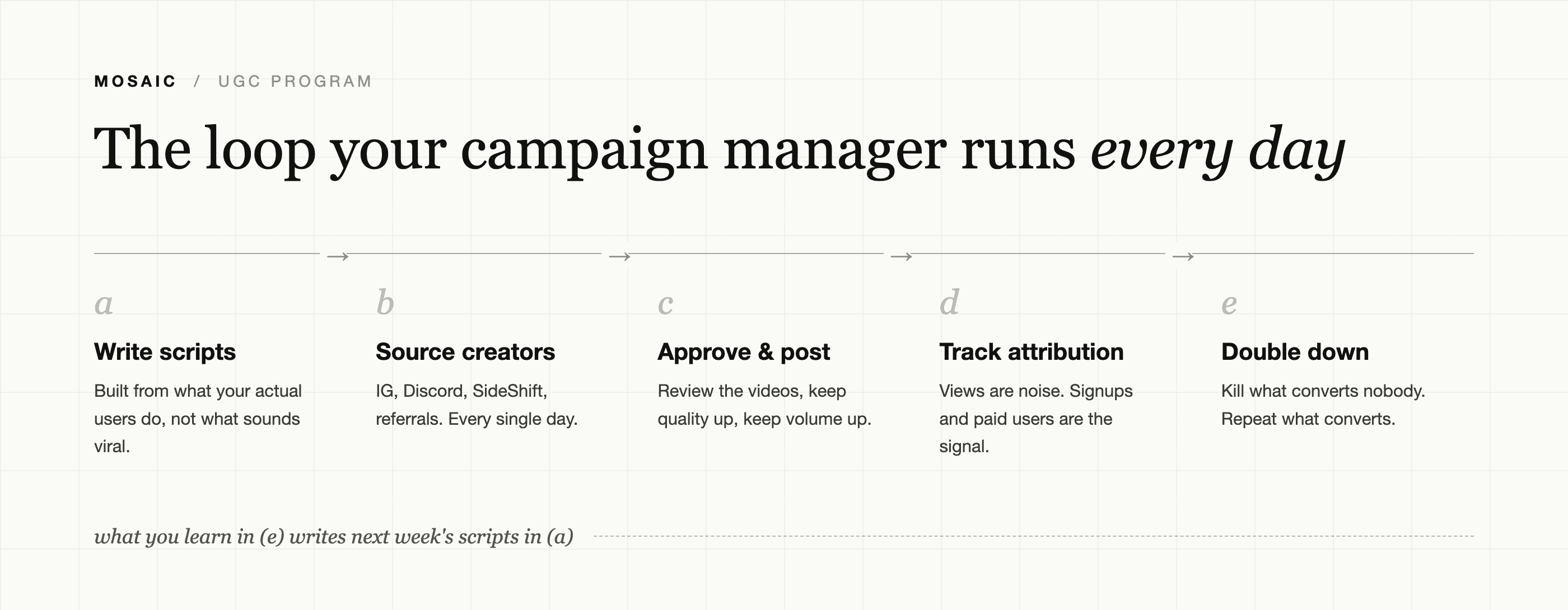
Find and create successful scripts. Find is the right word. You're not inventing scripts from taste, you're looking at what users already do with the product and turning the sticky use cases into something a creator can shoot in an afternoon.
Hire and source creators each day. IG, Discord, SideShift, referrals. Referrals especially. A creator telling their friend the program is good beats any DM you'll ever send.
When you do send DMs, keep them human. Say why you picked them, what the product is, what the pay looks like. Not "paid collab? 👀". The best creators get ten of those a week and answer zero of them.
The end goal is to become a brand where people reach out to you to join, so you barely have to source at all. That flipped for us at Motion a couple months in, and we're happy new creators are still doing it (reach out if you want to create for us!).
Neither job ever finishes, by the way. Stop writing scripts and your formats go stale. Stop sourcing and churn wins.
Attribution
Use software that properly tracks attribution. Talk to Claude Code or whatever tool you use to figure out the best framework for this.
Attribution is THE MOST important part, such that you know your money is going to good use.
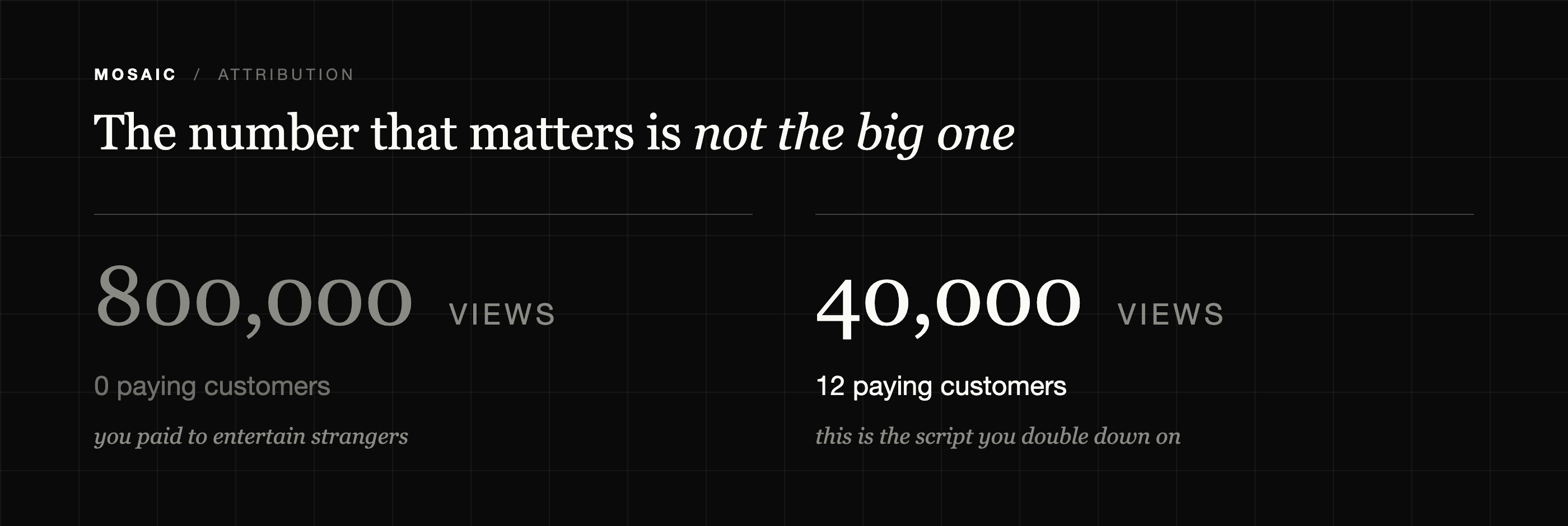
A real example of why. One video does 800k views and everyone celebrates. Another does 40k and nobody notices. Except the 40k video brought in twelve paying customers and the 800k one brought in zero. Without attribution you keep funding the first creator. We almost did.
Do not hire creators who will bring the wrong customers to your brand. US/EU is the best for converting paid users, at least in our experience. A creator whose audience can't ever buy your product is entertainment you're paying for.
Change your scripts to focus on what brings you actual customers. There is a scientific method behind this your campaign manager will need to design. Ours: every format is a hypothesis, kill what doesn't convert, double down on what does. This week's numbers write next week's scripts.
Mistakes I Paid For
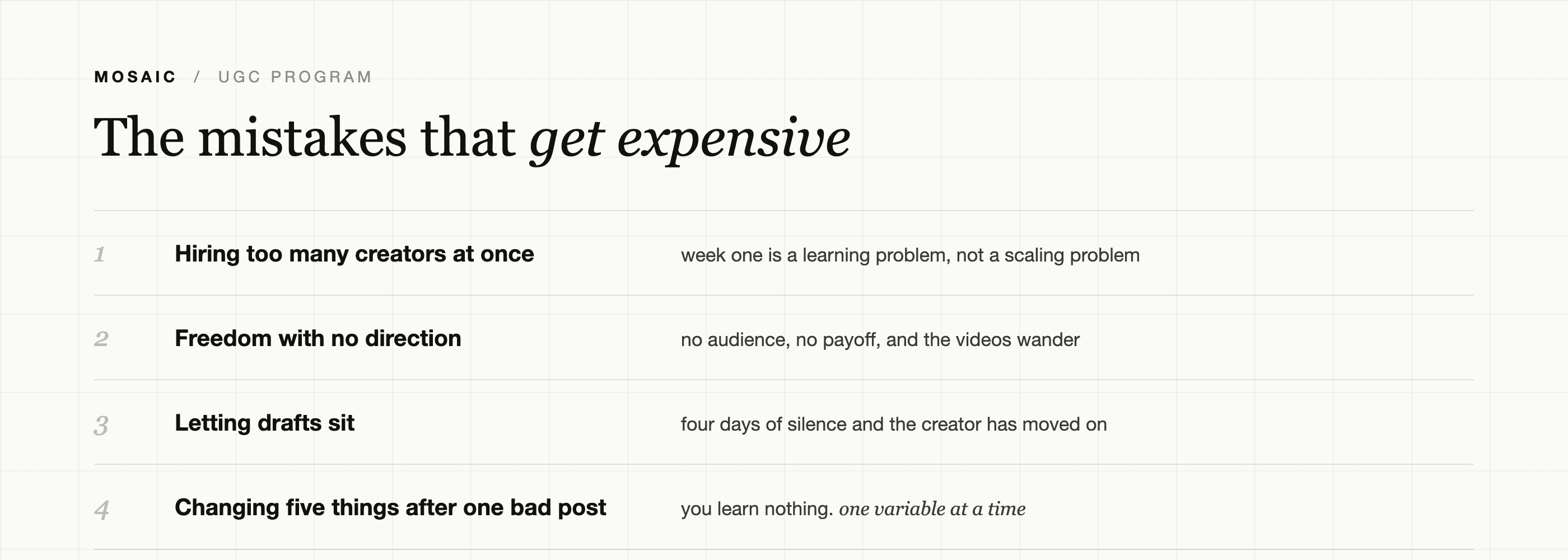
In roughly the order I made them:
Hired too many creators at once. Week one is a learning problem, not a scaling problem, and a big roster multiplies every bad brief you haven't fixed yet.
Confused creative freedom with no direction. Creators should sound like themselves. They still need a clear audience and a visible payoff or the videos wander.
Let drafts sit. Creators run on momentum. A draft that waits four days for feedback comes back from someone who already moved on. If it comes back.
Changed the hook, the creator, and the offer after one bad post. Learned nothing, because you can't tell which change did what. One variable at a time. Slower, and it's the only way you actually learn.
The Five Scripts
The back half of the guide is five scripts you can shoot as-is. Swap the product details, keep the structure.
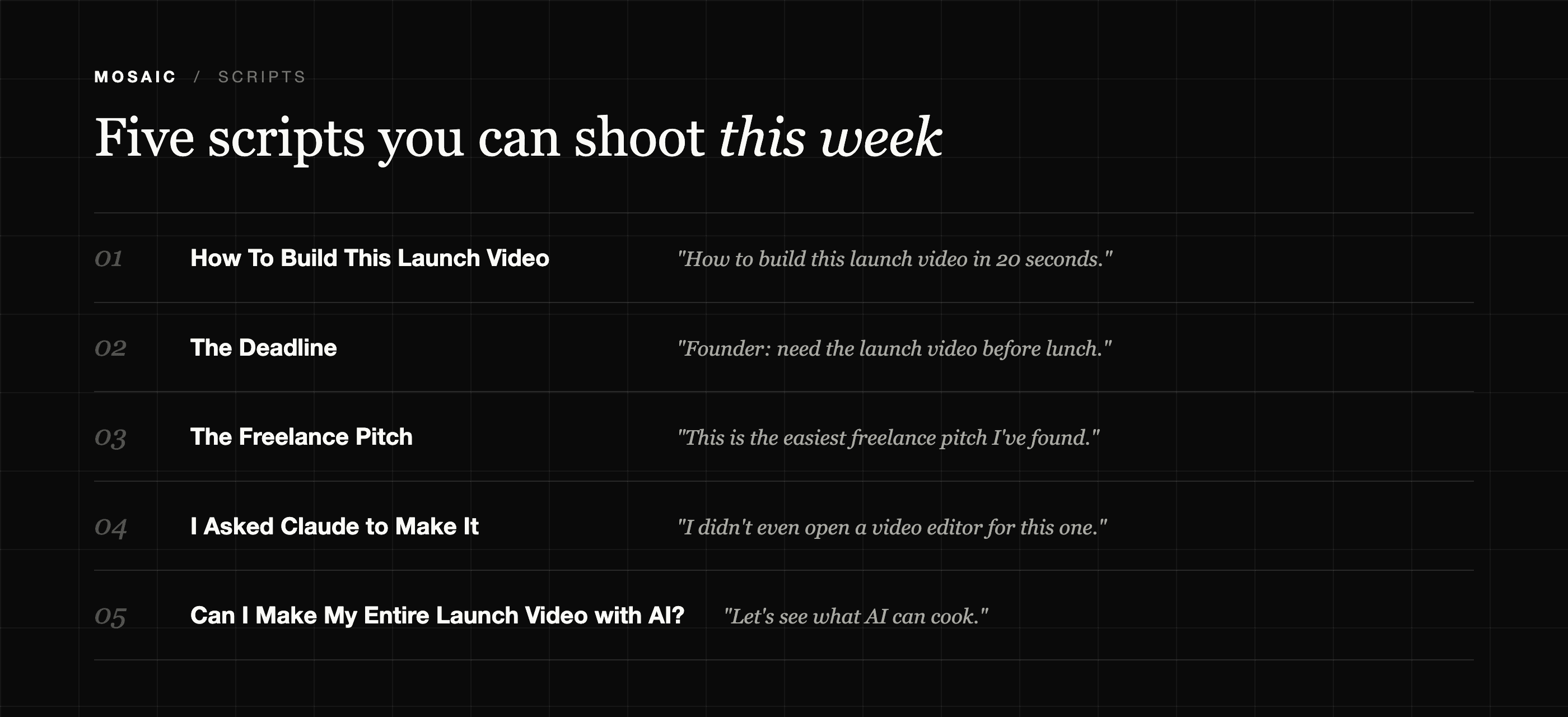
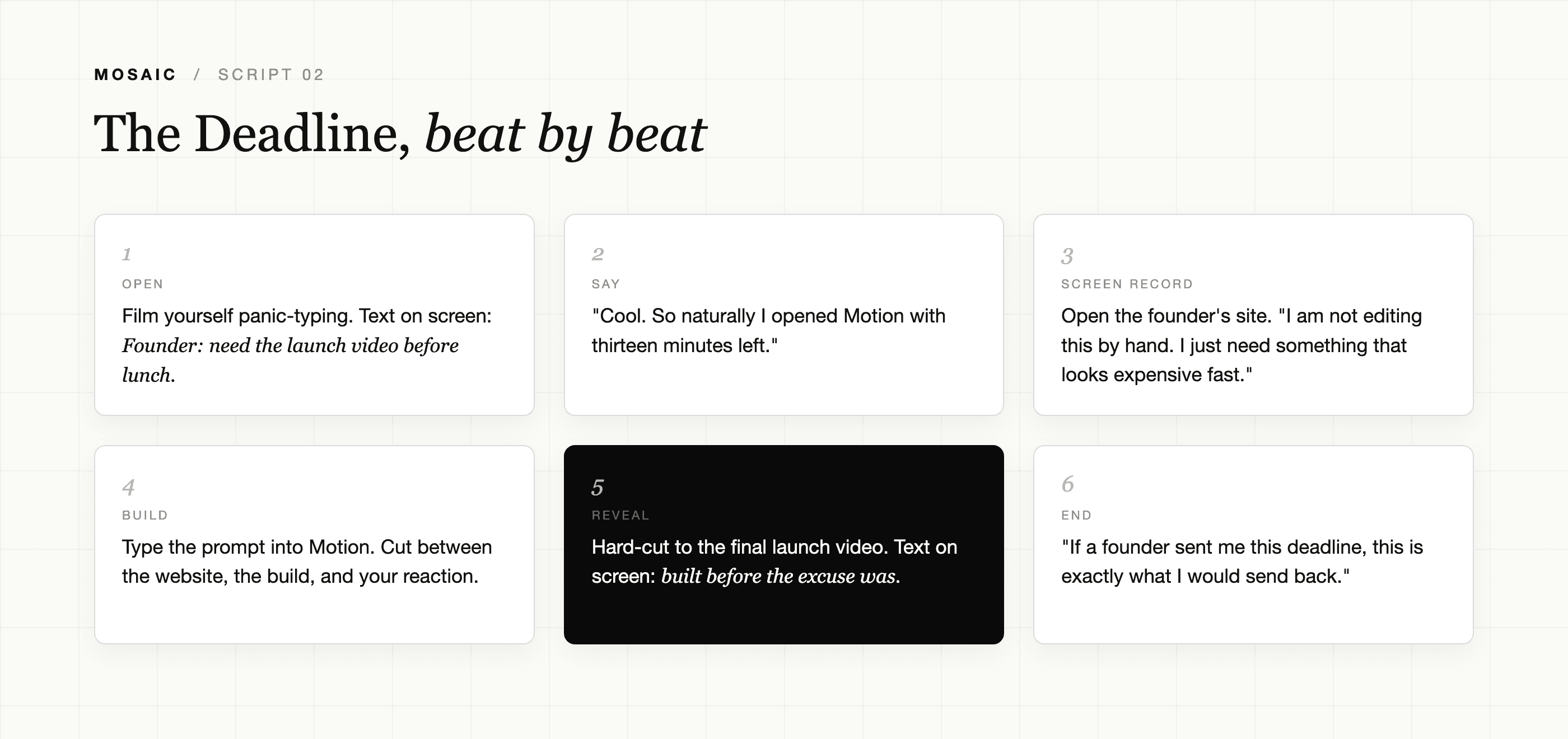
Each script comes with the exact prompt to type into Motion, the assets to pull or recreate, and one optional variation. The variation is the important part. "Make a launch video for this coffee company" is one video. "Pick any company and build their launch video" is a thousand.
Good Luck!
That's the program. Know the product, set up the five pieces, run the loop, let attribution move the money.
Join our Discord if you want to watch the system run from the inside.